

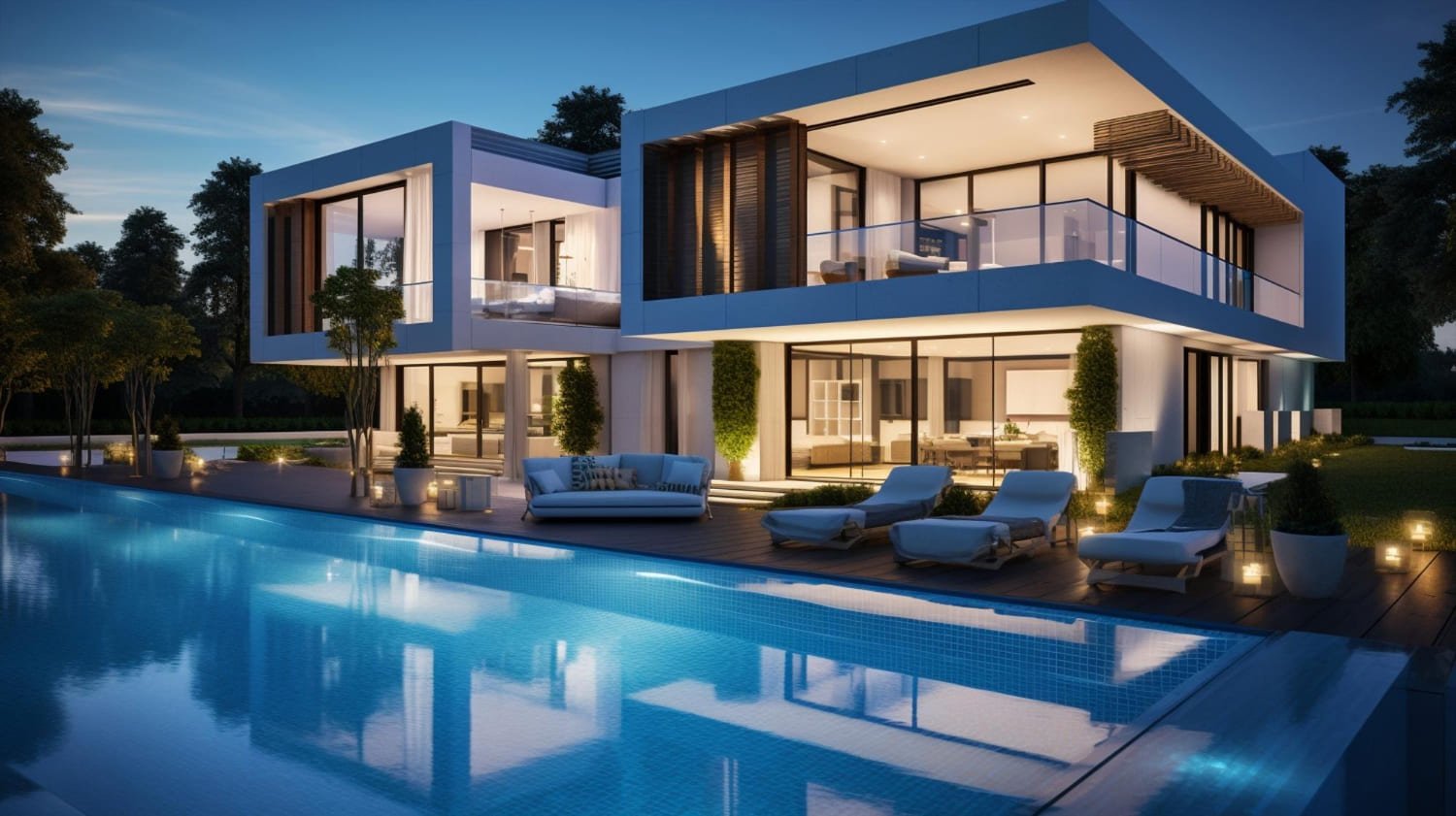
The construction sector in Saudi Arabia is undergoing a rapid shift toward smarter, more efficient, and more sustainable projects, driven by urban expansion, advances in digital technology, and a growing focus on quality of life and resource efficiency.
The quality of a building is no longer measured solely by the beauty of its design or the durability of its construction, but by its ability to provide a comfortable and safe environment, reduce energy and water consumption, support operating teams, and adapt to future requirements.
Smart and sustainable buildings combine thoughtful architectural design, control systems, data, and resource efficiency to improve a facility's performance throughout its life cycle.
What is a smart building?
A smart building is a facility that uses interconnected systems to monitor, operate, and optimize a range of services, such as air conditioning, lighting, power, water, security, and safety.
These systems rely on sensors, control units, and digital platforms that collect and analyze data, and then help trigger automated actions or provide information to operations teams.
For example, a smart system can adjust the air conditioning based on the number of users and the temperature, dim the lights in unused areas, or send an alert when water consumption rises abnormally.
Intelligence does not simply mean an increase in the number of devices, but rather the ability of systems to integrate and deliver clear operational value.
The Concept of Sustainability in Projects
Sustainability is the development of projects that meet current needs while minimizing environmental impact, conserving resources, and achieving long-term economic efficiency.
Sustainability encompasses site selection, building orientation, exterior envelope design, energy and water consumption, material selection, waste management, and indoor environmental quality.
Sustainability must begin at the design stage, because many fundamental decisions are difficult to modify after implementation.
The building's shape, orientation, proportion of glass, and type of insulation affect thermal loads, while the layout of spaces and systems affects air quality, comfort, and ease of operation.
The Relationship Between Intelligence and Sustainability
A building can be sustainable without advanced digital systems, just as it can be equipped with smart technologies without achieving true efficiency.
However, combining the two concepts yields better results.
Sustainable design reduces a building's energy and water needs from the outset, while smart systems help monitor performance and ensure continued efficiency during operation.
For example, good insulation and shading help reduce the thermal load, and then the smart control system turns on the air conditioning based on actual demand.
Thus, efficiency does not depend solely on the equipment, but on the integration of design, systems, and management.
Energy Efficiency
Air conditioning, lighting, and equipment account for the largest share of energy consumption in many facilities.
Energy efficiency begins with reducing the need for energy consumption through climate-responsive design, insulation, minimizing air leakage, and taking advantage of natural light without increasing heat gain.
Next comes the selection of high-efficiency equipment, the proper layout of the systems, and the use of variable control that allows operation to be adjusted as needed.
Building management systems can monitor energy consumption in different zones and devices, compare performance against target values, and detect abnormal operation.
Historical data also helps identify opportunities for improvement and measure the impact of the actions taken.
Water Management
Water efficiency is becoming increasingly important in projects, especially in environments that require careful resource management.
Solutions include the use of low-flow plumbing fixtures, efficient irrigation systems, the selection of climate-appropriate plants, and monitoring water consumption.
Smart meters can be used to detect leaks or sudden spikes in consumption and send alerts before the problem escalates into significant loss or damage to the building.
The reuse of treated water or condensate may also be considered in certain applications, subject to technical and health requirements.
Indoor Environmental Quality
Sustainability is not limited to reducing consumption; it also encompasses users’ health and comfort.
Air quality, temperature, lighting, and noise all affect productivity, comfort, and health.
Sensor systems help monitor air quality, carbon dioxide levels, and humidity, and adjust ventilation based on actual occupancy.
Lighting can also be controlled to provide appropriate levels and to make the most of natural light while avoiding glare.
These systems must be integrated with the architectural design, because technology alone cannot compensate for an inappropriate layout or a poorly performing building envelope.
Building Management Systems
A building management system serves as a centralized platform for monitoring and operating various systems, such as air conditioning, ventilation, lighting, power, and pumps.
The system allows users to view equipment status, log alerts, and schedule operations.
It helps maintenance teams identify the location of the malfunction and its possible causes before heading to the site.
Performance indicators can also be established to track energy consumption, equipment operating hours, temperatures, and failure rates.
However, the success of the system depends on the quality of its design, programming, and operation. If the requirements are not clearly defined, the system may become nothing more than a display interface with no real operational value.
Building Information Modeling
Building Information Modeling (BIM) enables the creation of a digital model that contains the architectural, structural, and electromechanical information for the project.
This technology helps facilitate coordination across disciplines and identify conflicts before implementation.
Items can also be linked to quantity data, specifications, and equipment, which improves the accuracy of the information and reduces errors.
The value of the model does not end at the design stage; it can be updated to reflect what has been implemented and then handed over to the operations team to serve as a reference for assets and equipment.
The model thus evolves from a design tool into a database that supports the project lifecycle.
Digital Twin
A digital twin is a digital model linked to actual data from a facility, enabling performance monitoring and analysis of its operational status.
The model can be connected to sensors, meters, and control systems to reflect the status of equipment, resource consumption, and temperatures in real time or on a periodic basis.
This data makes it possible to analyze trends, predict certain malfunctions, and support preventive maintenance rather than relying on repairs after a problem occurs.
It also helps compare actual performance with design objectives and identify the causes of any gaps.
Smart Maintenance and Asset Management
Traditional maintenance often relies on fixed schedules or failure reports, whereas smart maintenance uses operational data to determine actual needs.
Equipment operating hours, temperatures, vibration, and energy consumption can be monitored, and this information can then be used to detect a decline in performance.
For example, increased energy consumption by an air conditioner combined with a decline in its efficiency may indicate a need for maintenance before a complete breakdown occurs.
This helps reduce downtime, extend the life of equipment, and improve spare parts and resource planning.
Renewable Energy
Renewable energy sources, such as solar panels, can be incorporated into the project strategy to reduce reliance on conventional energy.
However, the decision to combine them must be based on an analysis of loads, areas, shading, cost, and maintenance requirements.
The systems must also be coordinated with the electrical, protection, and control networks, and the energy production and panel performance must be monitored.
Renewable energy becomes even more valuable when it is preceded by energy-efficiency measures, because reducing a building’s energy consumption allows a larger percentage of its energy needs to be met with clean energy.
Urban Design and Smart Infrastructure
The concept of intelligence and sustainability extends from buildings to neighborhoods and cities.
Geographic Information Systems (GIS) can be used to analyze roads, water and electricity networks, telecommunications networks, and stormwater drainage systems.
The data also helps improve traffic management, monitor infrastructure, and plan for expansion.
In stormwater drainage systems, hydrological modeling can be combined with site data to identify areas of risk and develop more responsive solutions.
In large areas, meters and central platforms make it possible to monitor resource consumption and load distribution at the project level.
Challenges in Implementing Smart Buildings
Among the most significant challenges are the high initial cost of some systems, poor coordination among suppliers, and a lack of clarity regarding operational requirements.
Many technologies may be added to a project without assessing the value they will provide, or closed systems may be used that are difficult to integrate and develop in the future.
In addition, inadequate training may prevent the operations team from taking full advantage of the available capabilities.
Therefore, clear objectives must be set for each system, solutions that can be integrated must be selected, and operations teams must be involved from the design phase onward.
Cost should be considered over the entire life cycle, not just the purchase price.
The Role of the Engineering Consultant
The consultant is responsible for translating smart city and sustainability goals into measurable design requirements.
This begins with an analysis of the nature of the project, its intended use, the loads, and the budget, followed by the identification of priority solutions.
He also coordinates between architecture, construction, and electromechanical and control systems, and establishes the appropriate specifications.
During implementation, he reviews the materials, equipment, programming, and testing.
During the handover phase, he ensures that the operating teams have been trained and that the necessary documentation, forms, and data are available.
The Economic Value of Smart and Sustainable Buildings
Some solutions may require a higher initial investment, but they help reduce energy, water, and maintenance costs over the life of the project.
It also reduces malfunctions and downtime, and improves space utilization and user comfort.
Data provides better capabilities for asset management and decision-making, rather than relying on estimates or reactions.
The value increases when systems are selected based on a clear financial and technical analysis that specifies the payback period, operational life, and maintenance requirements.
The Future of Projects in the Kingdom
Projects in the Kingdom are moving toward higher levels of digital integration and resource efficiency, particularly as cities and major projects expand and the hospitality, entertainment, industrial, and transportation sectors develop.
Data collection and analysis are expected to become an essential part of the operation of buildings and infrastructure.
Digital models, asset management, and performance-based maintenance will also become increasingly important.
Projects that incorporate these requirements from the planning stage onward will be successful, rather than adding them at the end of the design process.
Conclusion
Smart buildings and sustainability are not just a trend, but an approach to improving a project’s quality and performance throughout its life cycle.
Success begins with a design that minimizes requirements, followed by the selection of efficient systems and their integration with a platform that provides the necessary data and control.
By integrating engineering, technology, and sustainability, projects can create more comfortable and safer environments, reduce operating costs, and prepare for future requirements.
This approach represents a genuine opportunity to support urban and industrial development in the Kingdom and to develop projects that are more efficient and better able to generate sustainable value for society and the economy.